LUXURY UBUD GUIDE
There are places that reward those who already know them, and places that seduce everyone on first encounter. Ubud, perversely, manages both. It has been written about endlessly and understood rarely, a town that wears its fame lightly because the jungle is always louder than the noise around it.
All imagery in this article was captured exclusively through the lens of Splendid Magazine.
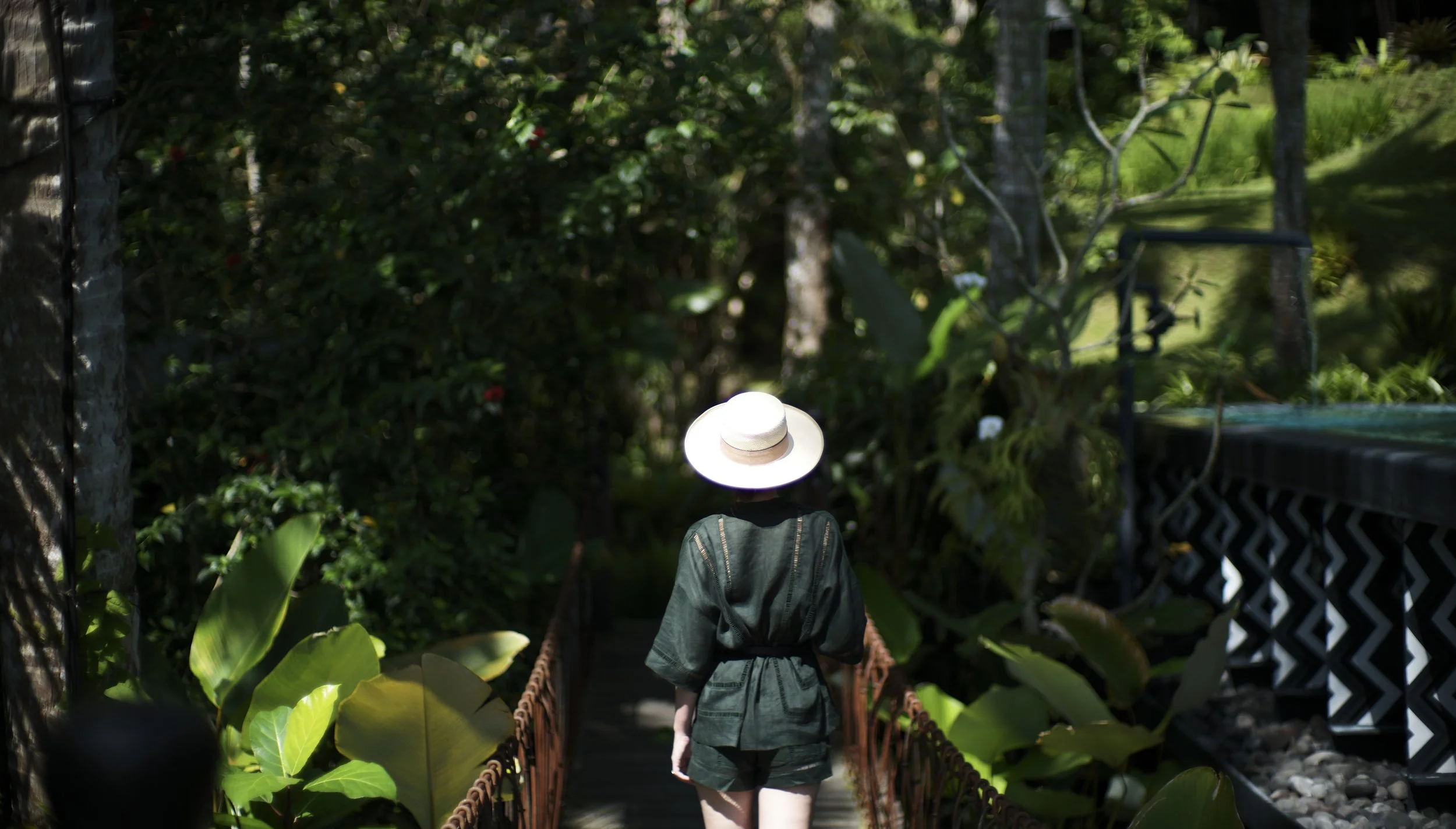
From the theatrical, tented wilderness of Capella Ubud, dreamed up by Bill Bensley from rainforest and settler mythology, to the hushed, architectural precision of Hoshinoya Bali, these are sanctuaries that treat luxury as an act of devotion.
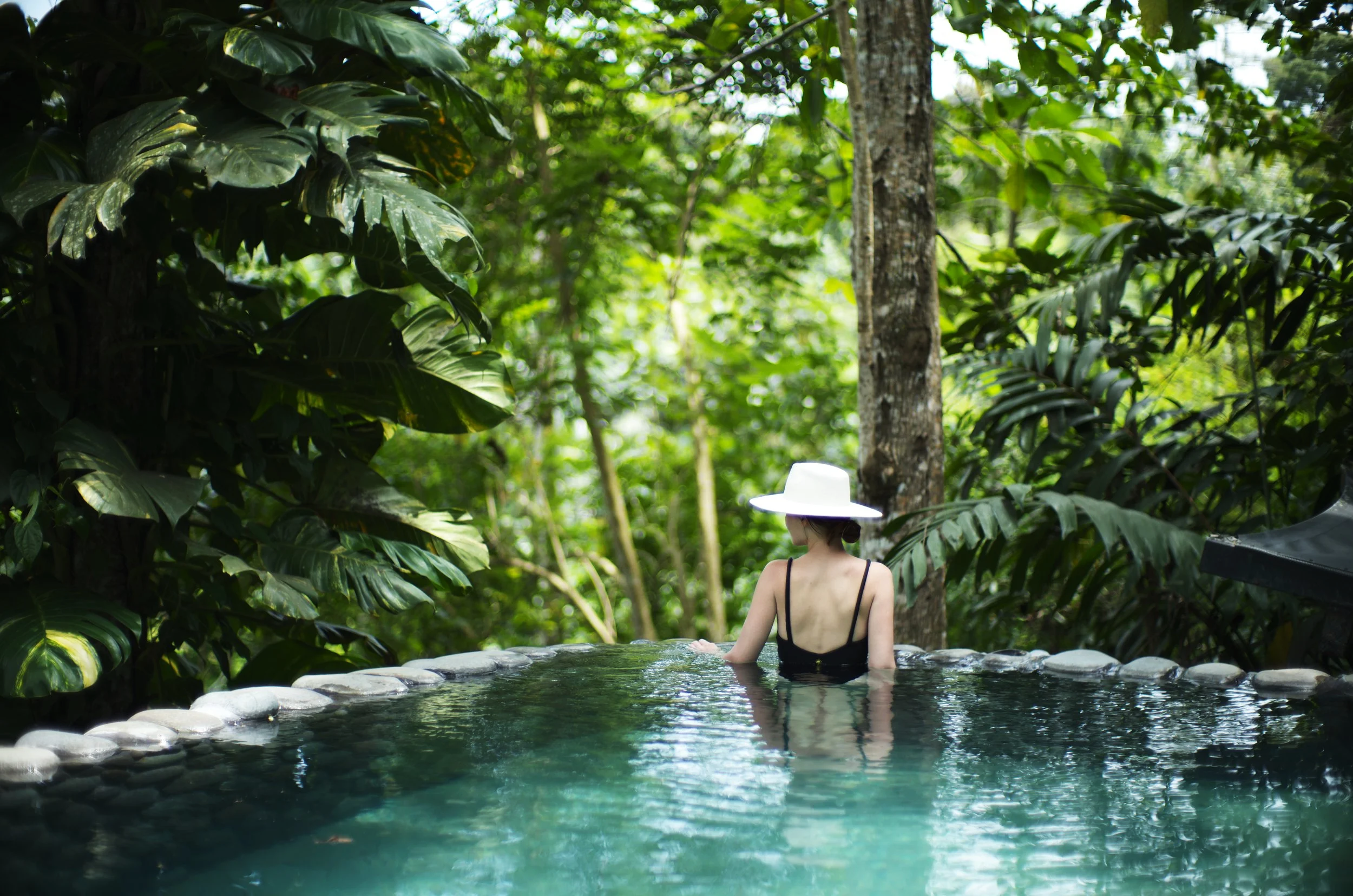
At Capella, copper tubs, carved teak and canvas pavilions sit suspended above the valley floor, linked by bridges that slip through the canopy as if they had always been there. At Hoshinoya, villas trace ancient temple waterways and rice terraces, Balinese craft distilled through a distinctly Japanese restraint. In both, the architecture works in perfect sympathy with its surroundings, nothing forced, nothing louder than the jungle itself.
And when night falls, the conversation shifts to the table. Three restaurants carry that same reverence for place, turning dining in Ubud into something immersive, atmospheric and entirely its own.
WHERE TO STAY
CAPELLA UBUD
In the hills above Keliki Village, nestled between nine acres of rainforest and rice paddy fields, Bill Bensley has built a camp conjured from a story: the tale of Dutch settlers shipwrecked on Bali's shores in the 1800s, who pitched their tents in the jungle and somehow impressed even the local Rajah.
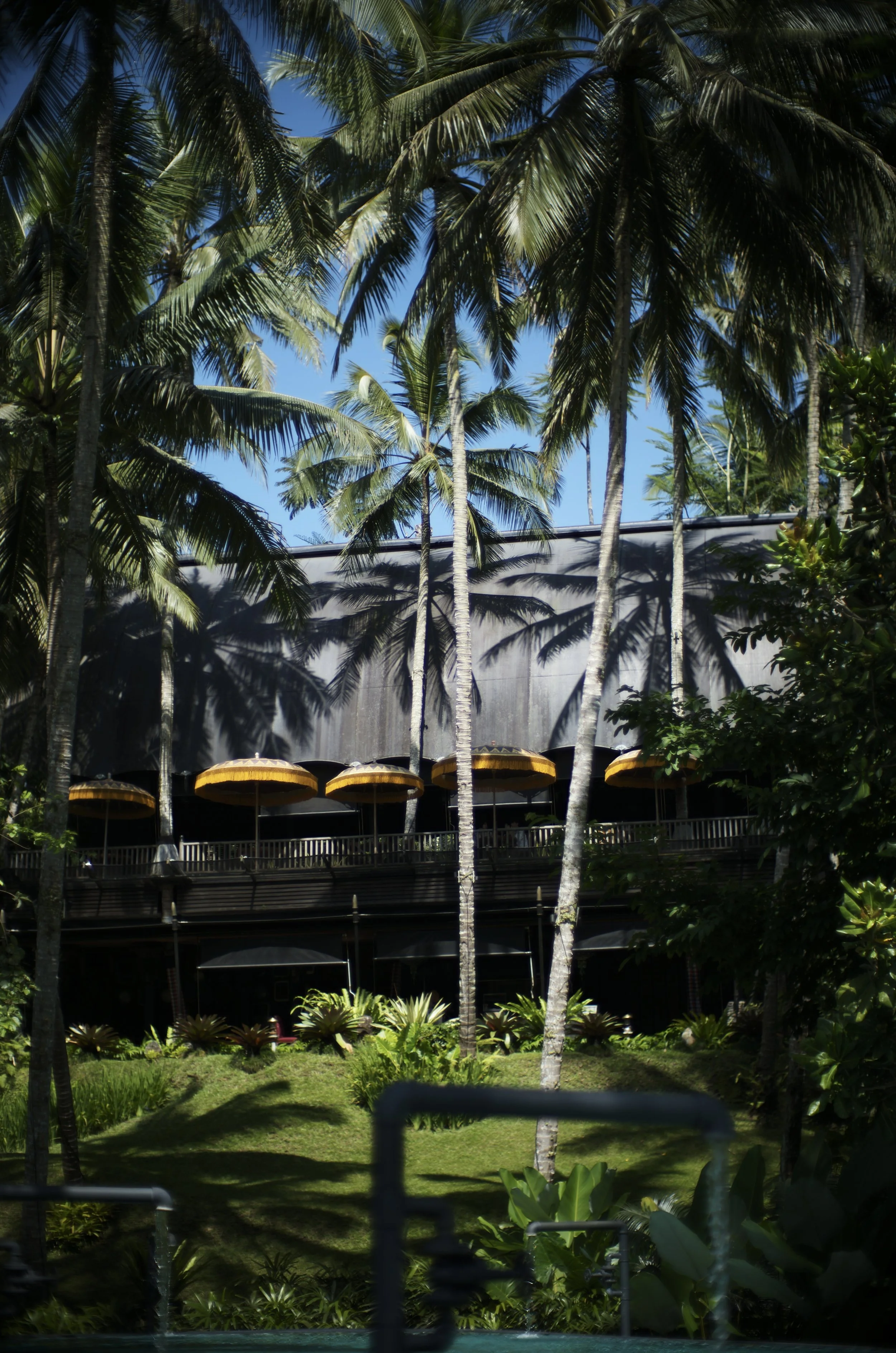
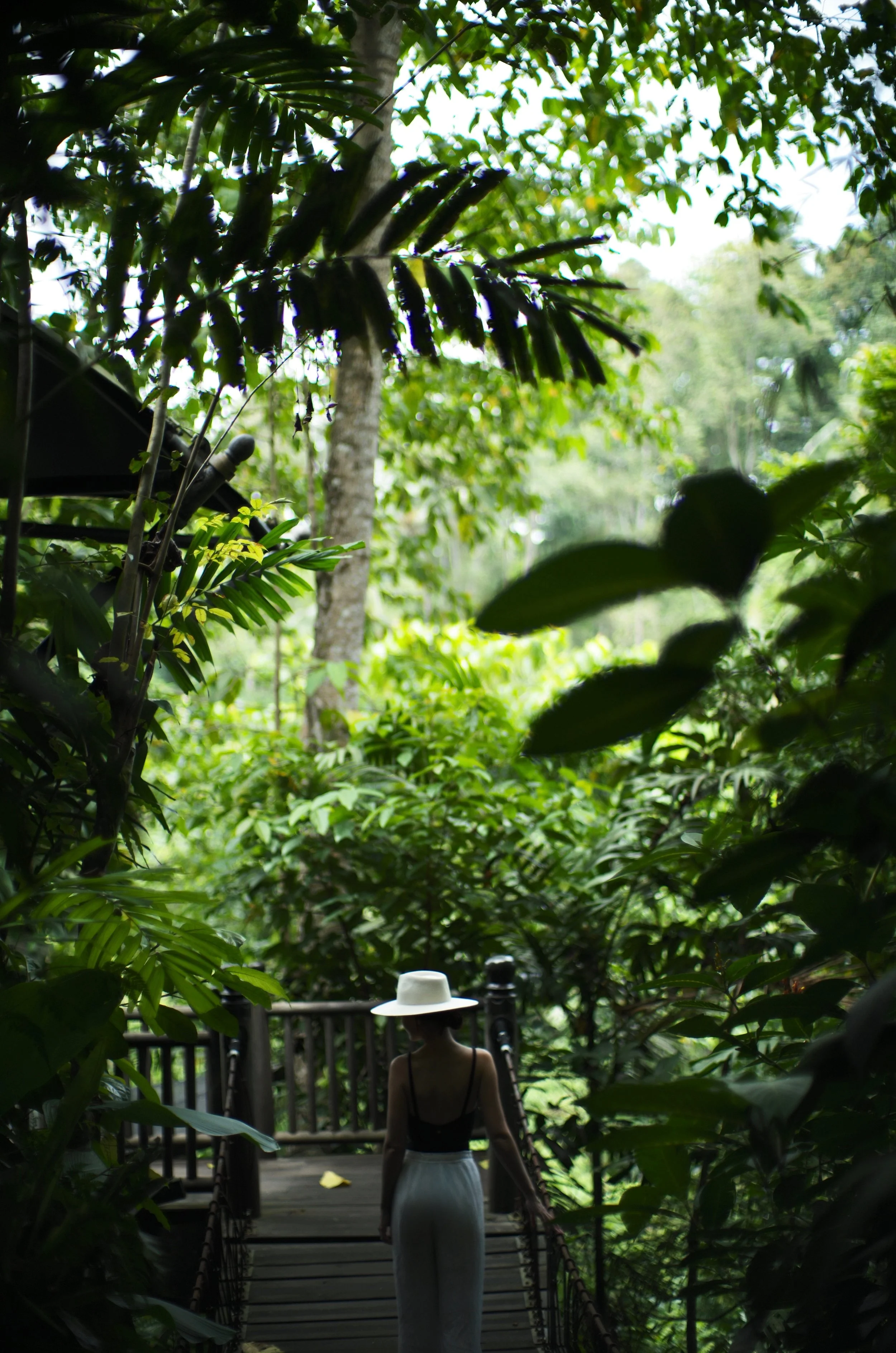
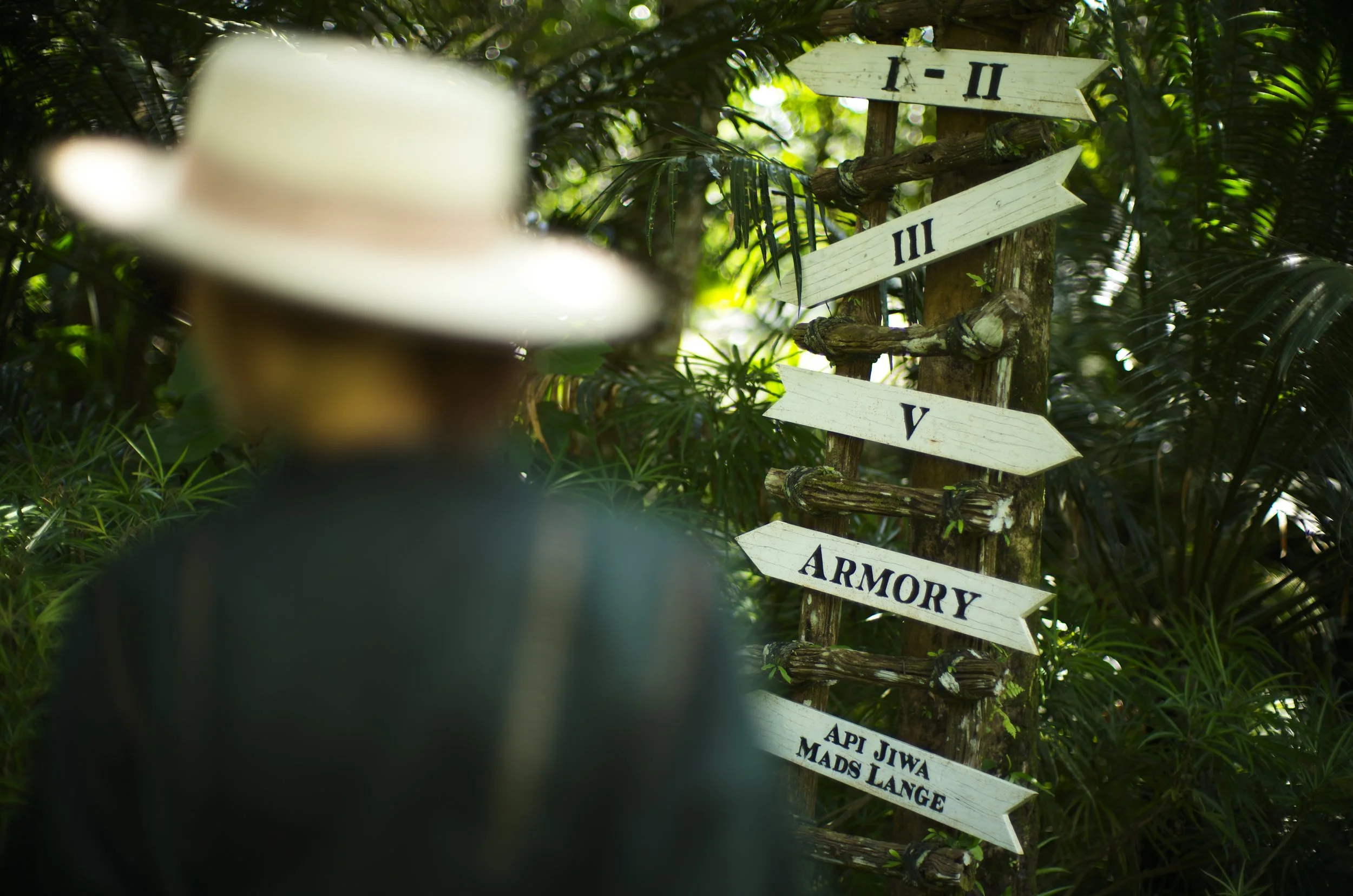
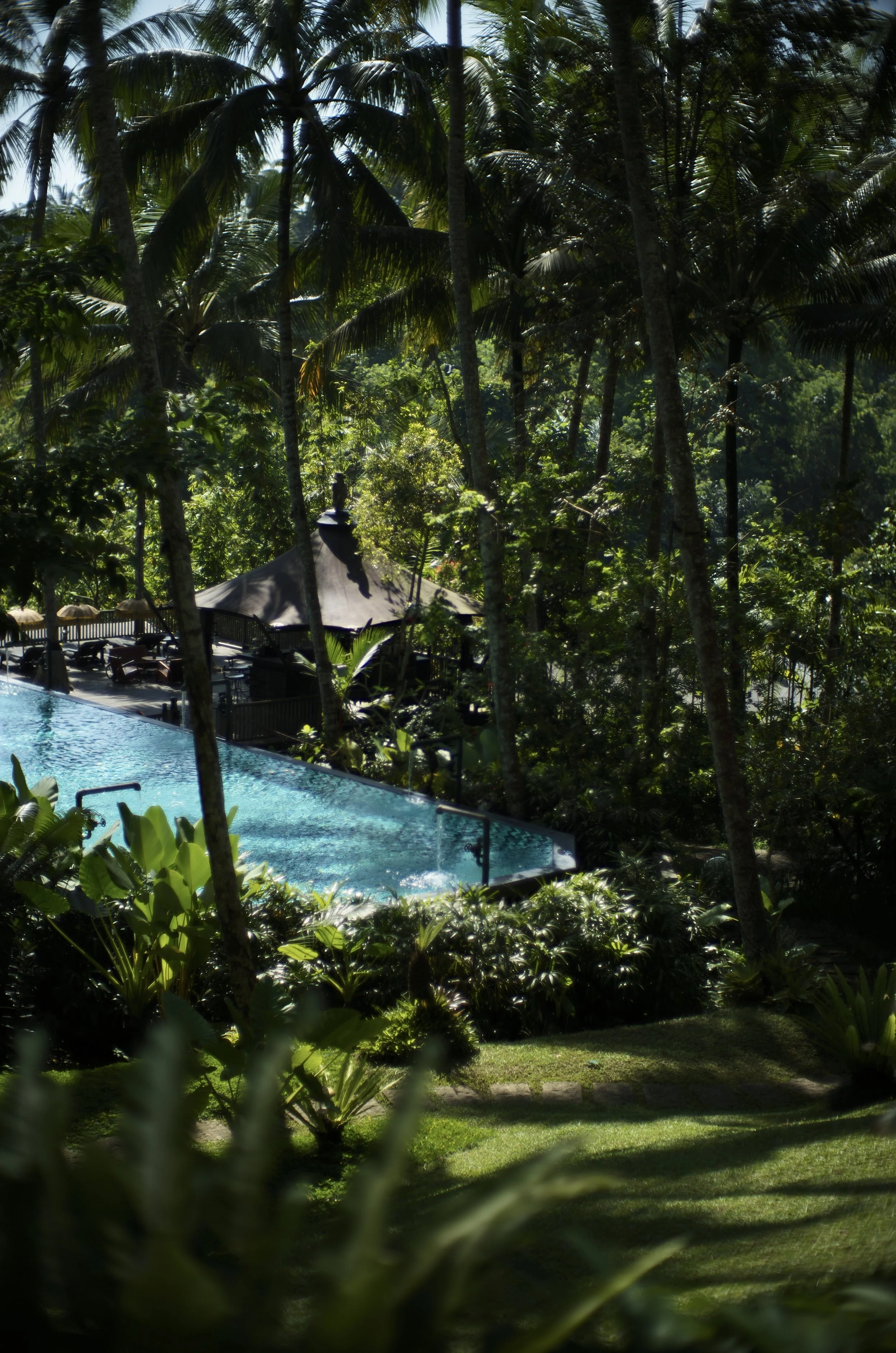
The project began as a hundred-room hotel. Bensley soon persuaded the owner to change course entirely. He called his philosophy "Minimal Intervention", scale it down, keep every tree, let the forest speak. Not a single one was felled during construction. The result is gloriously improbable. Occasionally, a palm tree simply grows up through a terrace, because that is where it always was.
"I convinced the owner to build a 22-tent, high-yield, low-impact, ecologically aware project that did not cut down even one tree in what is still a very dense jungle. I am very proud of that." - Bill Bensley
To position each tent, the design team erected full-scale bamboo mockups on-site, ensuring both jungle views and the morning birdsong were perfectly framed. All 22 retreats carry individual narratives drawn from the settler mythology: the Explorer, the Puppet Master, the Cartographer. One character is Mads Lange, the historical White Rajah of Bali, a Danish trader who arrived around 1840 and became a celebrated peace-broker between Dutch colonists and Balinese rulers.
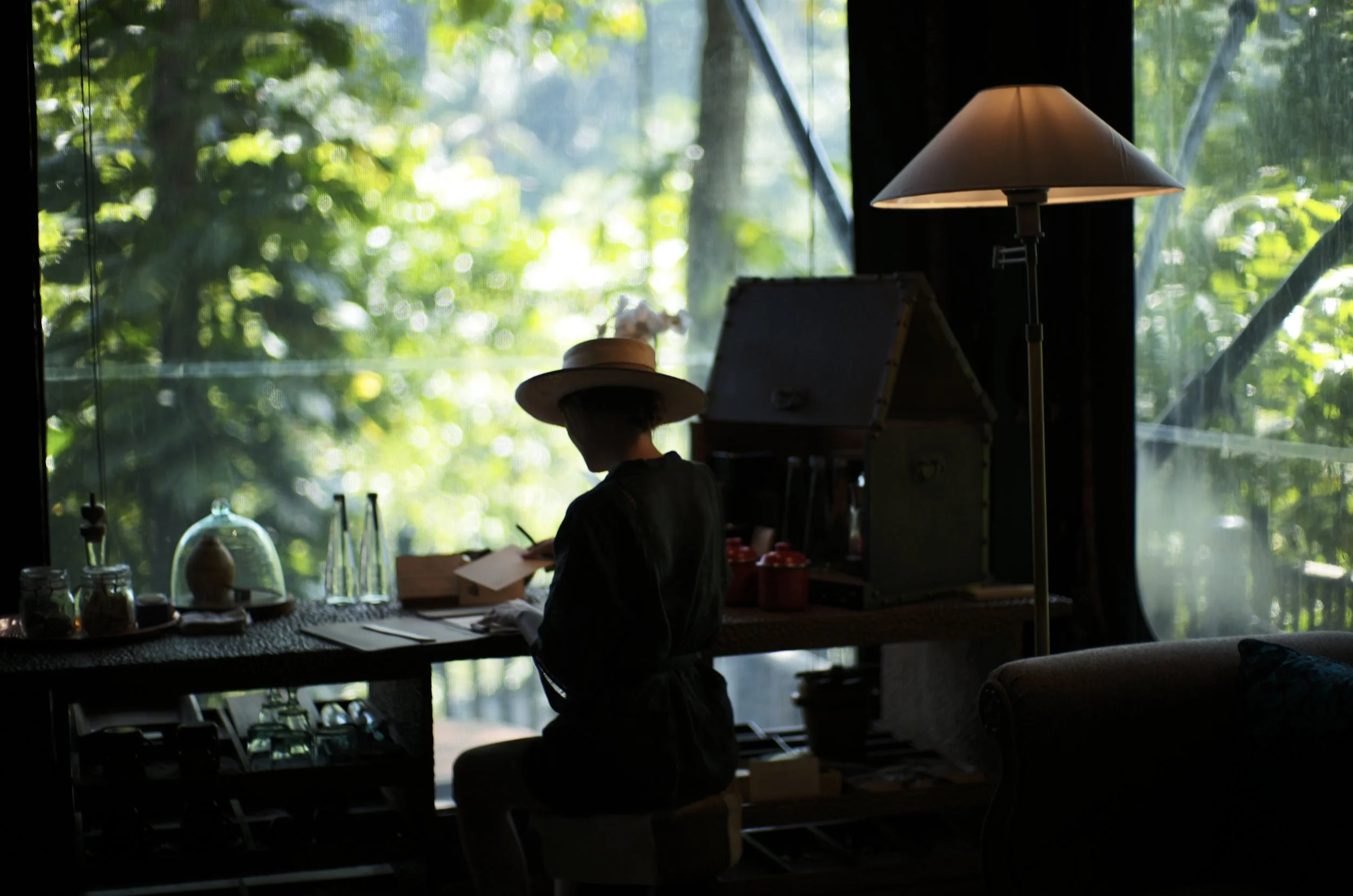
Every material carries the same weight of craft and intention. Teak floors were handmade in Central Java, built to last generations. The hand-carved Balinese doors were specially commissioned and took local craftsmen a full year to complete. The hand-hammered copper bathtubs, each requiring a hundred hours of skilled labour, are perhaps the defining object of the Capella experience, an argument for beauty that insists on taking its time.
Twenty-one suspension bridges, each spanning 120 metres over the Wos River, link the tented retreats, pool decks and public spaces. Forty-seven brass monkey statues punctuate the grounds, a private mythology made permanent in metal.
HOSHINOYA BALI
For its first international venture, the Japanese resort group Hoshinoya could not have chosen a more quietly extraordinary setting. Framed by a palimpsest of thousand-year-old temple canals and the Pakerisan River valley, the property occupies a place outside ordinary time.
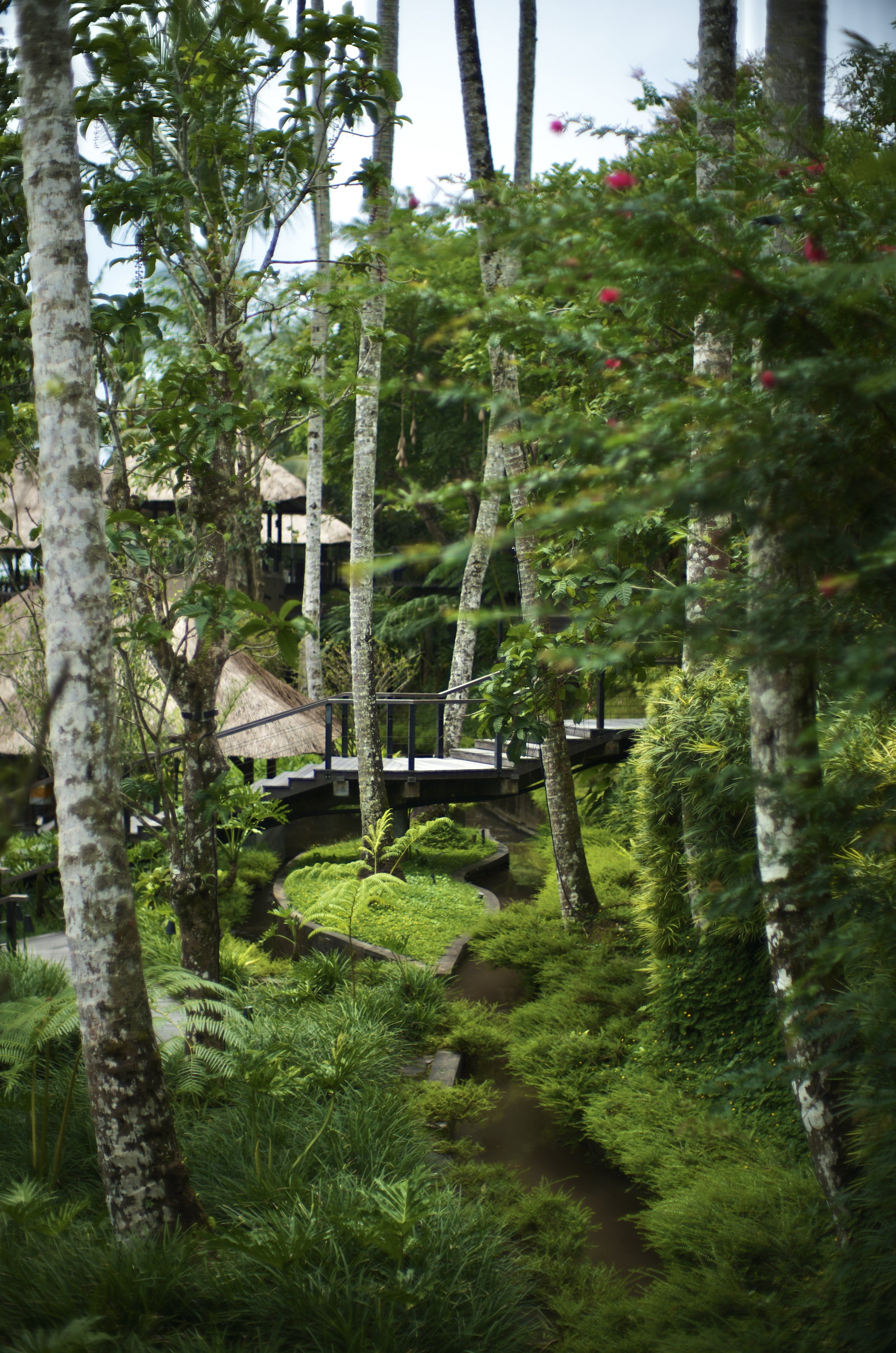
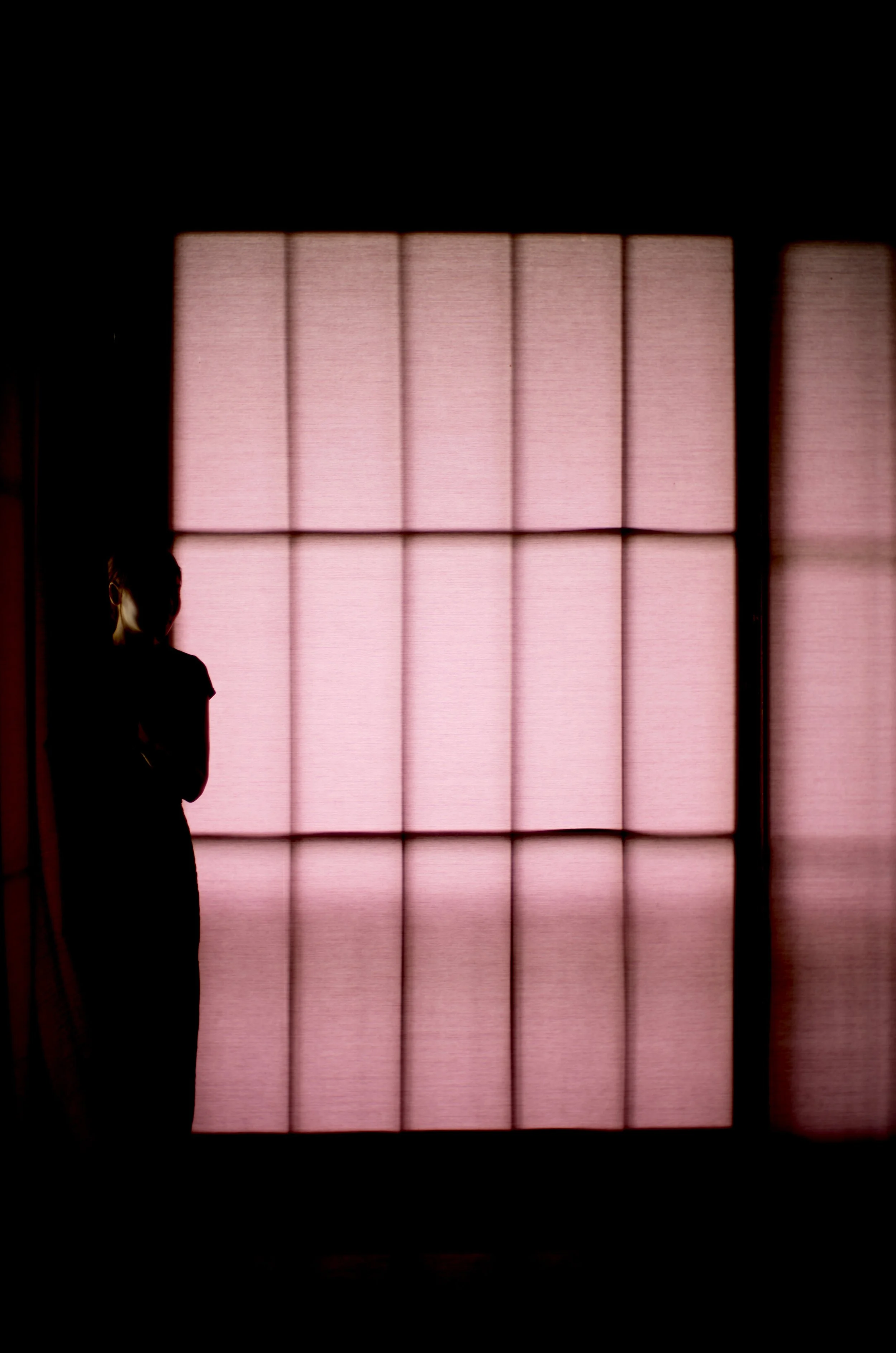
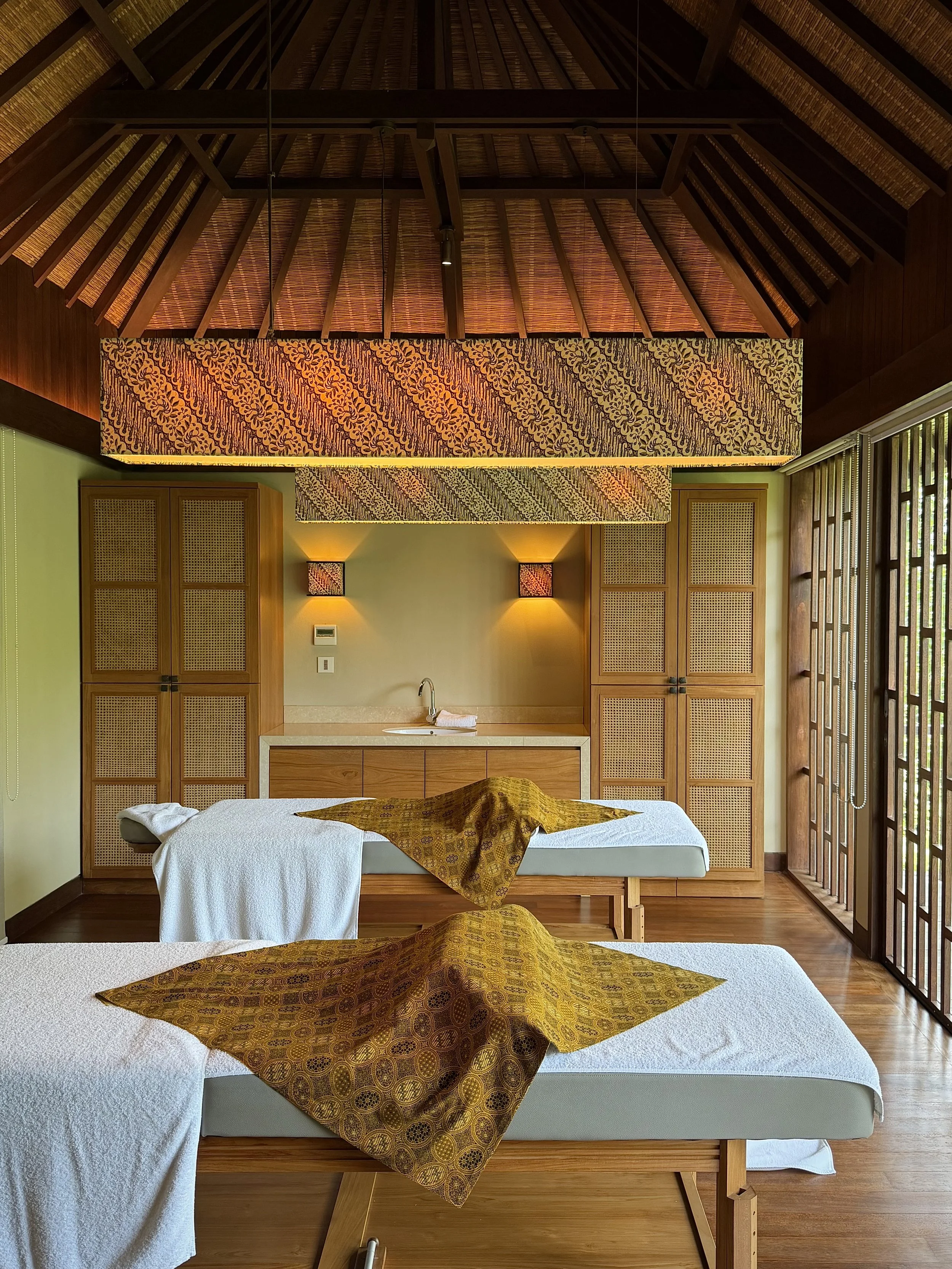
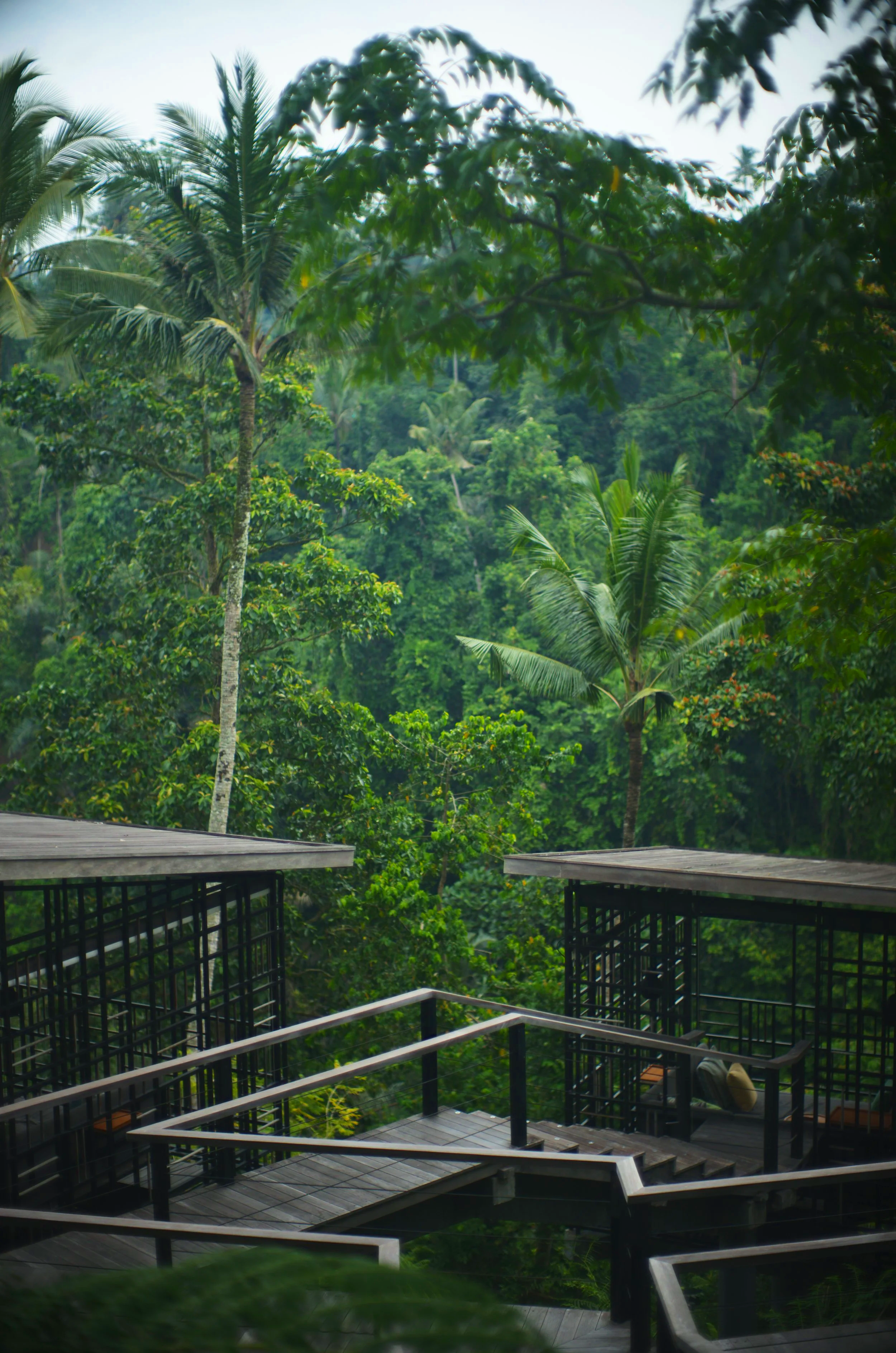
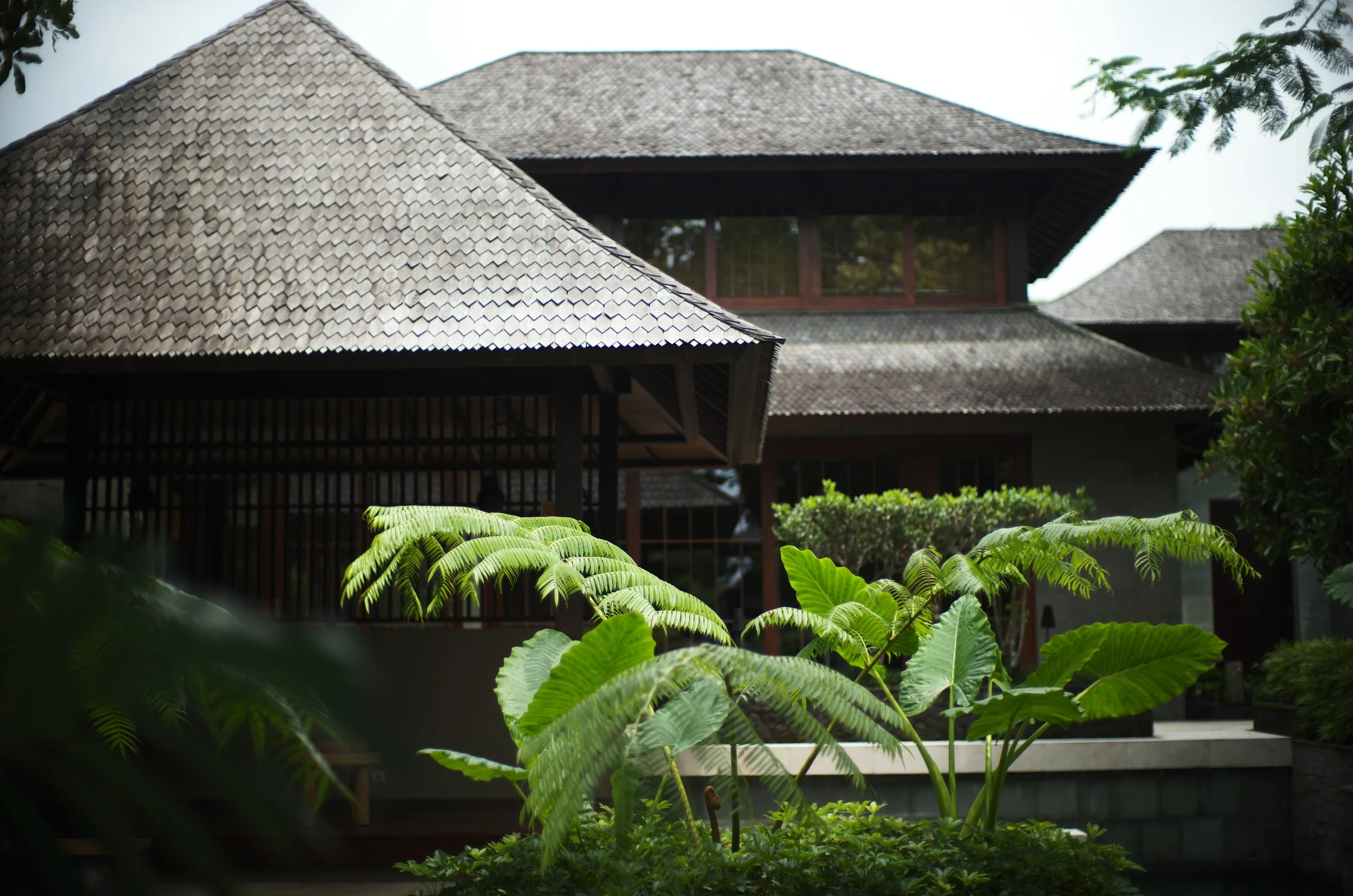
Architect Rie Azuma has threaded thirty villas along a dense three-hectare stretch of rainforest, rice terraces and shrines with the kind of deliberate lightness that distinguishes great Japanese spatial thinking. Nothing is forced. The architecture listens.
The aesthetic cleaves close to the Balinese ideal: balés capped by alang-alang grass, wall carvings of flora and fauna by local artisans, a long stretch of swimming pool evocatively styled as a lushly foliaged canal. A fantasist touch arrives in the form of trellised gazebos suspended high over the tree line, offering a literal bird’s-eye panorama of the deep green forest canopy. The effect is of floating, a sensation Hoshinoya understands as a form of hospitality.
The resort's Japanese heritage resurfaces in the kitchen, where resident chef Makoto Miyamaguchi composes a modern Balinese-meets-Japanese menu that includes carpaccio paired with the pungent heat of sambal, a pairing as surprising and inevitable as the property itself.
WHERE TO DINE
ROOM 4 DESSERT
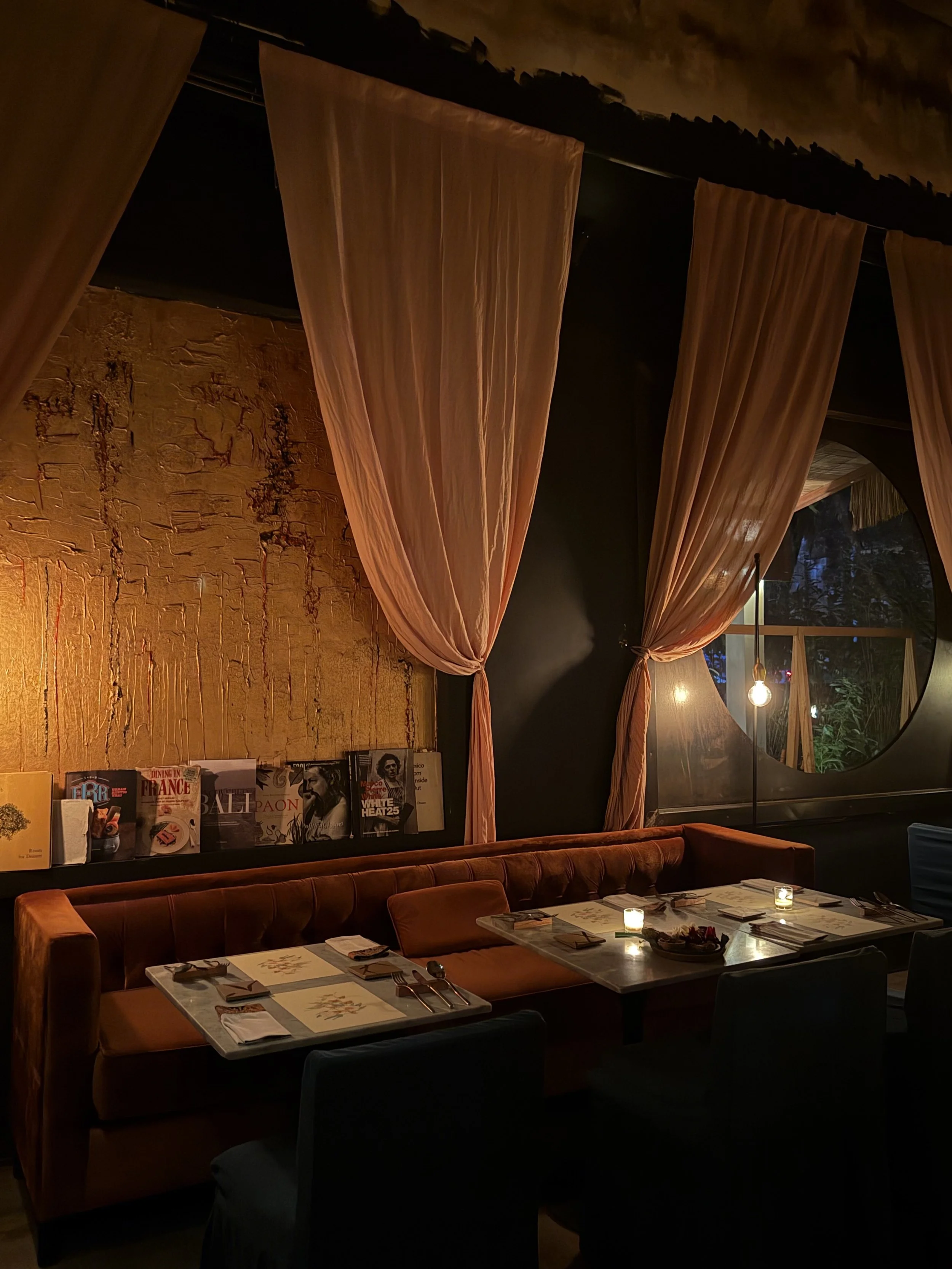
There are restaurants that serve dessert. And then there is Room 4 Dessert, a place that has made the sweet course the entire architecture of an evening and, in doing so, become one of the most singular dining destinations in all of Southeast Asia.
Chef Will Goldfarb's outpost on Ubud's outskirts has long held a cultish renown among those who follow serious food. That reputation was formalised when Goldfarb and his venue were featured on an episode of Chef's Table, the series that has become the definitive global portrait of culinary vision.
The menu moves from savoury snacks through to plated desserts and on to petit fours, each course a study in control and surprise. What makes Goldfarb's cooking genuinely radical is its rootedness: nearly everything on the table is drawn from local Balinese producers, pandan, palm sugar, salak, cacao from nearby Jatiluwih. The island's larder becomes the palette.
The trio of distinctly designed dining rooms means the spatial experience shifts as the evening unfolds, each a different register of atmosphere, each a considered frame for what arrives on the plate. To dine at Room 4 Dessert is to understand that a meal's final chapter can, in fact, be its most extraordinary.
Advance booking strongly recommended.
BEGAWAN BIJI
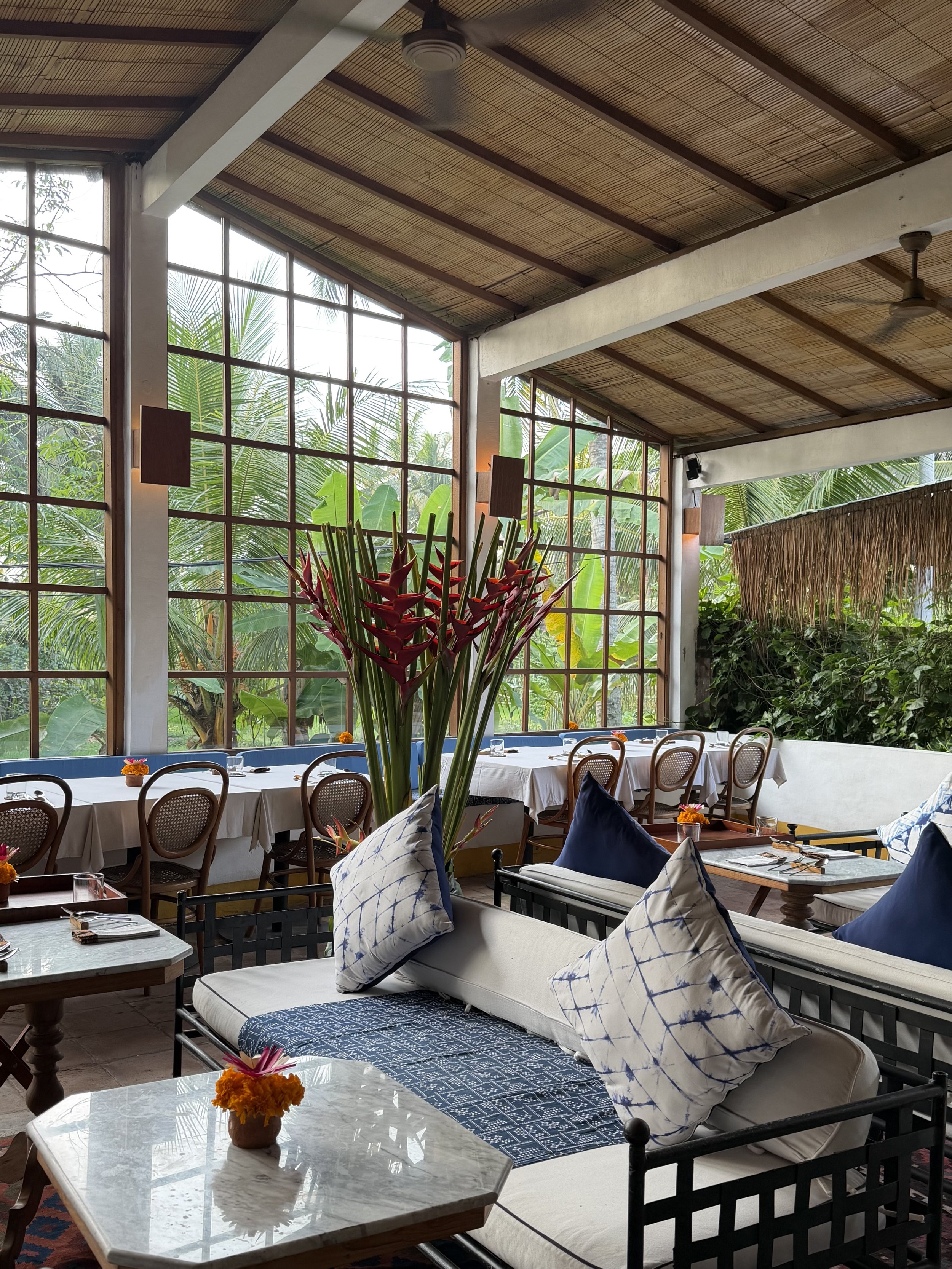
Twenty minutes from Ubud’s centre, on the edge of a thriving permaculture garden, Begawan Biji offers something rare: a restaurant inseparable from the land it inhabits. Its name means “wise seed,” and every plate reflects that philosophy.
Set among regenerative rice fields in Bayad Village, the sustainably designed space frames sweeping views of Bali’s agricultural landscape. Diners look out over the very paddies that supply their meal, with provenance visible from the table.
Contemporary Indonesian heritage dishes are cooked over fire using freshly harvested garden ingredients. The countryside is the kitchen. Recognised by the Honeycombers Awards 2025, a Good Design Award, and a Sustainable Restaurant certification, Begawan Biji proves that dining can be both deeply rooted and quietly forward-thinking.
Note: Begawan Biji also hosts celebrated collaboration dinners with Api Jiwa at Capella Ubud, a rare meeting of Ubud's two great fire-and-land dining philosophies.
API JIWA
Designed by Bill Bensley as an imagining of a 19th-century laundry and mud room, the intimate space carries characteristic Bensley layering: antique furniture, wooden scrub boards, charcoal irons, Indonesian batik linen. Some of the original trees from the jungle simply grow up through the restaurant itself, a reminder that the camp was always theirs first.
"For centuries, the kitchen has stood as the heart and soul of every home, a sacred space where stories are shared, traditions are cherished, and flavours come alive.” - Chef Arvie Delvo, Executive Chef
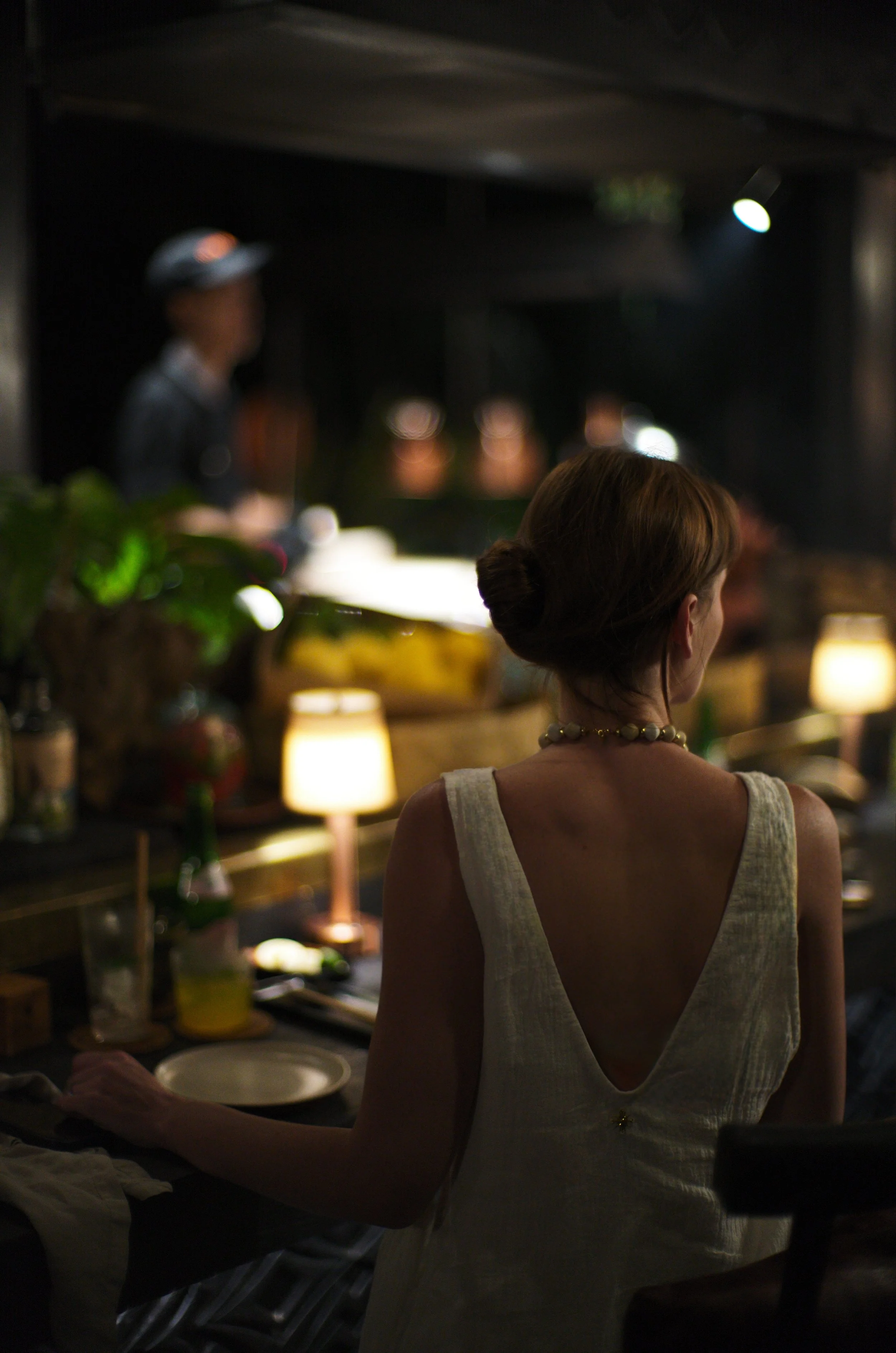
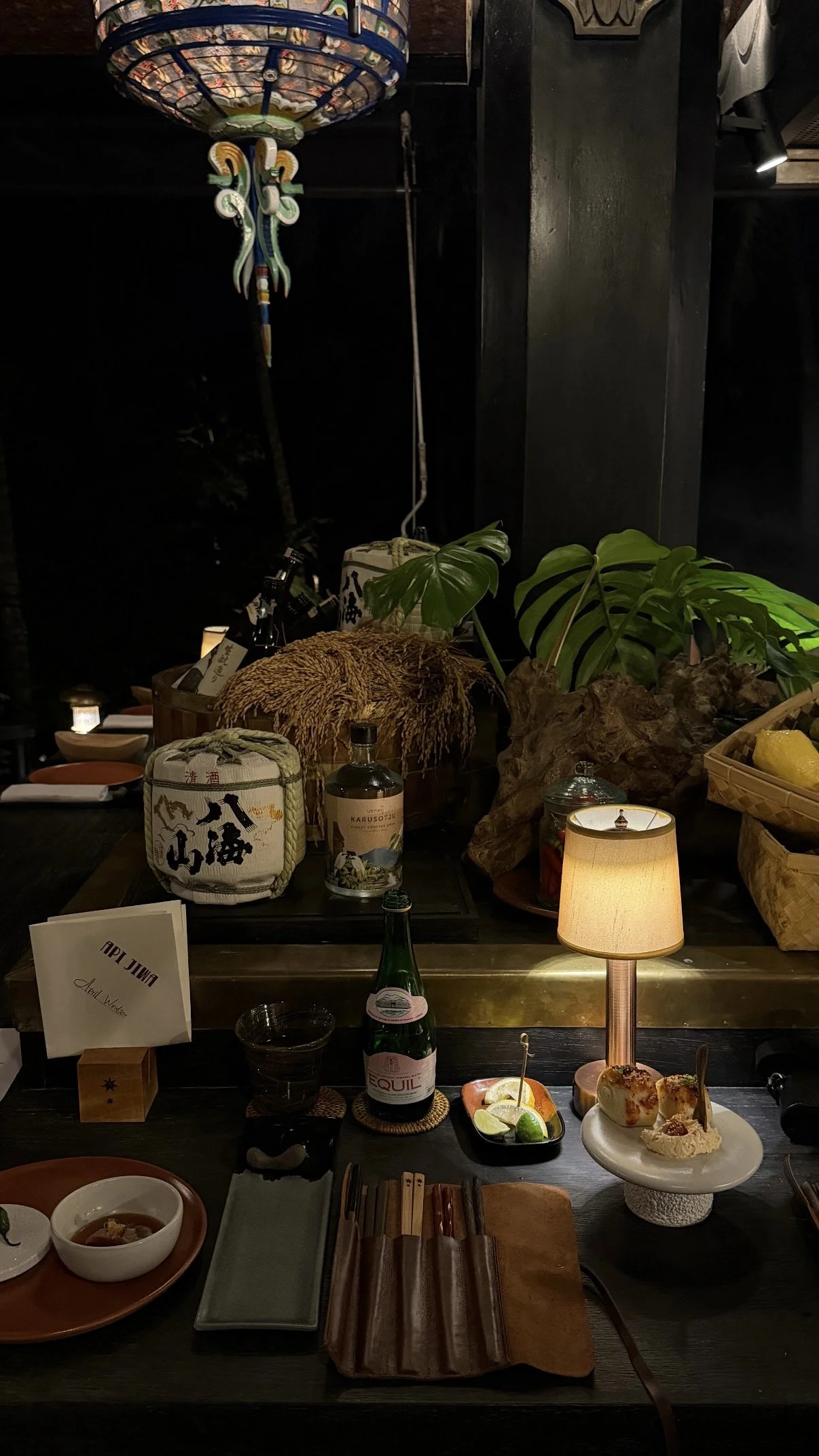
At the centre is an open grill kitchen. Ten guests sit at the chef's counter; a few private tables offer seclusion. The omakase format, I leave it up to you in Japanese, places complete trust in the chef. Every course is touched by fire. Api Jiwa preserves the ancient Japanese Warayaki technique, grilling with wara, leftover rice stalks from surrounding paddy fields, to impart a smokiness no other method can replicate. The 17th-century technique connects every dish to both the landscape and the history of Bali simultaneously.
The evening extends beyond the table. Before and after dinner, guests gather around a campfire for artisanal cocktails and stories; old black-and-white films flicker against the jungle backdrop. The meal has no clean ending. It dissolves gradually into the Ubud night.
Ubud does not reveal itself quickly. It asks something of you first, stillness, patience, a willingness to be surprised. At Capella, that surprise comes wrapped in theatre and settler mythology. At Hoshinoya, in the quietest of Japanese gestures. And at the table, whether it is Will Goldfarb turning a petit four into a philosophy, the paddy fields of Begawan Biji feeding you from fifty metres away, or the Warayaki flame at Api Jiwa tracing a 17th-century line from Japanese craft to Balinese earth, Ubud reminds you that great food, like great design, is always a conversation with place.
All imagery featured in this article was captured exclusively for Splendid Magazine on the Leica M Series and iPhone 17 Pro.